


GLP-1: What Every Woman Should Know
A Woman's Guide to Appetite, Metabolism and Staying Strong
If you've opened Instagram lately, you've met four little letters everywhere: GLP-1. It's become shorthand for a new generation of weight and metabolic medicines — but GLP-1 itself isn't a drug at all. It's a hormone your own body already makes, every single day, and understanding it changes how you think about hunger, energy and looking after yourself.
Whether you're curious, considering a GLP-1 medication, or already on one, here's what the science actually says — and how to support your body so you feel strong, nourished and clear-headed along the way.
First, What Is GLP-1?
GLP-1 (glucagon-like peptide-1) is a gut hormone — a small chain of amino acids, which makes it a peptide. It's released by specialised L-cells in your intestine after you eat, and it acts as one of your body's natural "I've had enough" signals. As this comprehensive review of the incretin hormones explains, GLP-1 does several clever things at once.
- It nudges the pancreas to release insulin when blood sugar is high — and only when it's high — helping keep glucose steady.
- It slows how quickly your stomach empties, so a meal stays with you longer and you feel fuller for longer.
- It speaks directly to appetite centres in the brain, gently turning down hunger and "food noise."
In other words, your natural GLP-1 helps orchestrate the whole conversation between your gut, your blood sugar and your brain. It's a normal, healthy part of how a woman's body regulates energy.
So Where Do the Medications Come In?
GLP-1 medications (you'll know the brand names — semaglutide and tirzepatide among them) are engineered versions of this hormone that last far longer in the body than the few minutes your own GLP-1 survives. By keeping that satiety signal switched on, they reduce appetite and support meaningful weight loss. A helpful overview of how they work across the brain and body is set out in this review of the mechanisms behind GLP-1 medicines, and the longer-term picture in adults with overweight or obesity is captured in the two-year STEP 5 trial.
They can be genuinely life-changing tools. But — and this is the part that gets far less airtime — how you eat, move and support your body while taking them makes an enormous difference to how well you feel and what you keep hold of.
The Part Nobody Tells You: Protect Your Muscle
When you lose weight quickly, you don't only lose fat. You lose some lean tissue — muscle — too. In the landmark STEP 1 trial, body-scan data showed that a substantial share of the weight lost came from lean mass, not just fat. That matters especially for women, because muscle is where we hold our strength, our metabolism and — as oestrogen falls with age — our long-term protection against frailty.
The good news: this is largely modifiable. A 2024 review on lean mass and GLP-1 therapies highlights two simple levers that help preserve muscle while the fat comes off — eating enough protein, and doing regular resistance (strength) training. It's not about the gym for hours; it's about giving your body the raw materials and the reason to hold on to muscle.
Why Protein Becomes Non-Negotiable
On a GLP-1, appetite drops — which is the point — but it means the food you do eat has to work harder for you. Protein is the priority. In a well-controlled randomised trial in the American Journal of Clinical Nutrition, people eating a higher-protein diet during an energy deficit lost more fat and gained lean mass compared with those eating less. A broader systematic review and meta-analysis reaches the same conclusion: more protein means more muscle preserved through weight loss.
When your appetite is small, hitting your protein target from food alone can be genuinely hard. This is exactly where a quality protein supplement earns its place — an easy, gentle way to top up on the days a full meal feels like too much.
Look After Your Digestion
Because GLP-1 slows the gut down, the most common side effects are digestive — nausea, and very often constipation. In the pooled gastrointestinal tolerability analysis of semaglutide, constipation affected roughly one in four people, and tended to last longer than the other symptoms. Most effects are mild and settle with time, but they're a real reason women tell us they feel sluggish or uncomfortable in the early weeks.
Fibre and fluids are your friends here. Fibre adds bulk and keeps things moving — and it has a lovely second benefit that closes the loop on this whole story: when gut bacteria ferment fibre, they produce short-chain fatty acids that stimulate your body's own GLP-1 secretion. A recent review on fibre and GLP-1 describes how the two work along the same pathway — meaning fibre both eases the side effects and gently supports the hormone naturally.
Support Your Focus and Energy
Eating much less can leave you low on the nutrients that steady mood, focus and energy — and "brain fog" is a common complaint in the early weeks. Prioritising nutrient-dense food, staying hydrated, and supporting your body with the right building blocks (protein again included, alongside ingredients that support mental clarity and muscle) all help you feel like yourself while your appetite recalibrates.
Can You Support GLP-1 Naturally — Without Medication?
Yes, to a degree. You'll never replicate a medication with a meal, and it would be dishonest to claim otherwise. But you can absolutely encourage your own GLP-1 response. The same two habits that protect you on a medication also nudge your natural hormone: eating protein at each meal, and eating plenty of fermentable fibre from vegetables, pulses, whole grains, nuts and seeds — the fuel your gut bacteria turn into those GLP-1-stimulating short-chain fatty acids. Add regular movement and decent sleep, and you're working with your physiology rather than against it.
In Summary — Supporting Your Body Through GLP-1
- 🌿 GLP-1 is a natural gut hormone that helps control appetite, blood sugar and fullness.
- 🌿 GLP-1 medications extend that signal — powerful tools, but they ask more of how you eat and move.
- 🌿 Rapid weight loss can cost you muscle; protein and strength training help you keep it.
- 🌿 Constipation and nausea are common early on — fibre and fluids ease them, and fibre feeds your own GLP-1.
- 🌿 Protein, fibre, movement and sleep support your natural GLP-1 too — no prescription required.
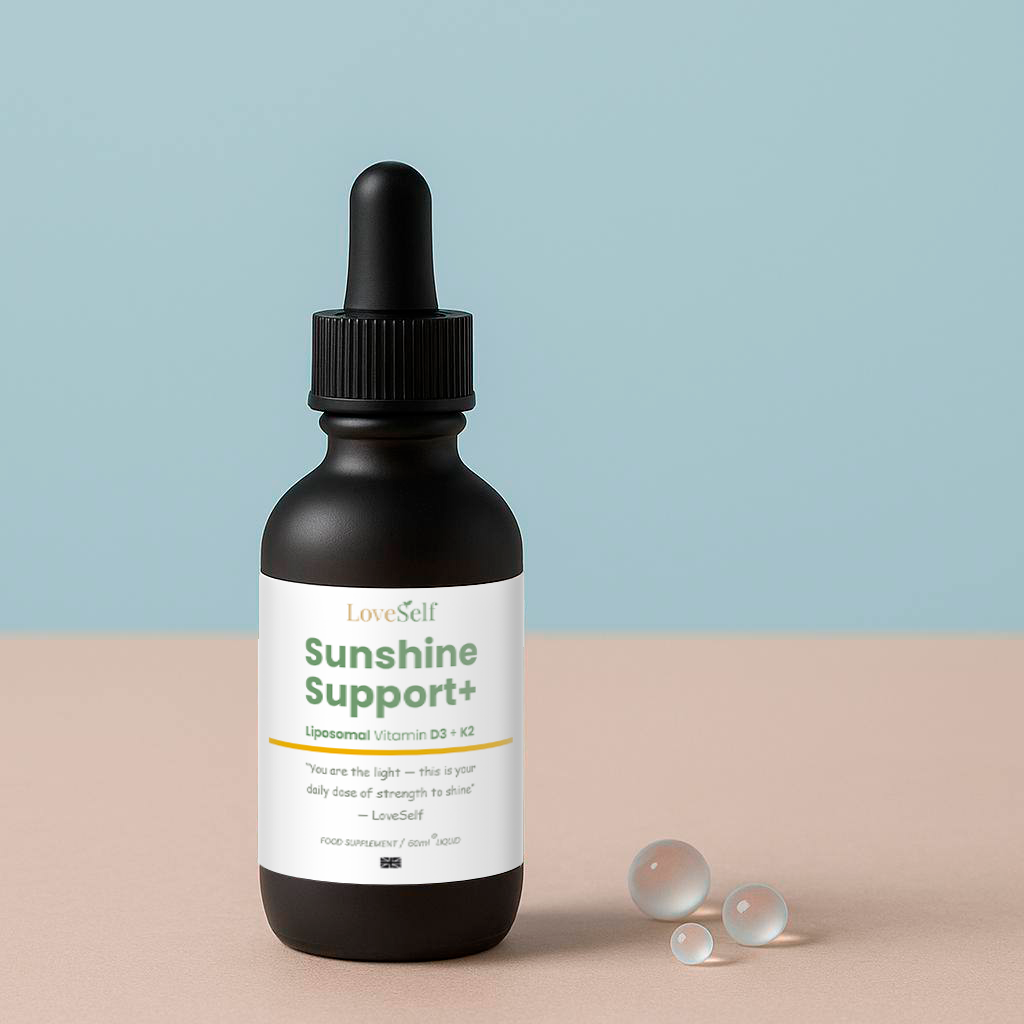
At LoveSelf, we believe your health should be supported from every angle — which is exactly why we built our GLP-1 Support Pack. It brings together three daily essentials for a woman on this journey: Protein Power to help protect lean muscle, Tummy Tamer to support digestion and regularity, and Mind & Muscle to support focus, energy and strength. Whether you're on a GLP-1 or simply supporting your body's own, it's a simple way to feel nourished, steady and strong.
Explore the LoveSelf GLP-1 Support Pack →
Start within. Feel the difference.
This article is for educational purposes and is not medical advice. GLP-1 medications are prescription-only and should be started, adjusted or stopped only under the guidance of a qualified healthcare professional. Supplements are intended to support, not replace, a balanced diet. Always consult your healthcare provider for personalised advice, particularly if you are pregnant, breastfeeding or managing a health condition.
References
- Nauck MA, et al. The evolving story of incretins (GIP and GLP-1). Diabetes, Obesity & Metabolism, 2021. Read the study
- Mechanisms of GLP-1 receptor agonist-induced weight loss. The American Journal of Medicine, 2025. Read the study
- Garvey WT, et al. Two-year effects of semaglutide (STEP 5). Nature Medicine, 2022. Read the study
- Wilding JPH, et al. Once-weekly semaglutide in overweight or obesity (STEP 1). NEJM, 2021. Read the study
- Neeland IJ, et al. Changes in lean body mass with GLP-1-based therapies and mitigation strategies. DOM, 2024. Read the study
- Longland TM, et al. Higher vs lower protein during energy deficit with exercise. AJCN, 2016. Read the study
- Effects of dietary protein on body composition after weight loss: systematic review & meta-analysis, 2016. Read the study
- Wharton S, et al. GI tolerability of once-weekly semaglutide 2.4 mg. DOM, 2022. Read the study
- Tolhurst G, et al. Short-chain fatty acids stimulate GLP-1 via FFAR2. Diabetes, 2012. Read the study
- Dietary fibre and GLP-1 receptor agonists in obesity management, 2025. Read the study