

Creatine: The Missing Supplement in Most Women's Routines?
A Woman's Guide to Strength, Focus, Mood & Healthy Ageing
Let's talk about one of the most researched supplements in the world — one that women have quietly been told wasn't for them. It's not a fad, it's not just for gym bros, and the science behind it has grown remarkably in the last few years:
Creatine.
For decades it was filed under "muscle-building for men." Today we understand it very differently: creatine is one of the simplest, best-evidenced ways to support a woman's strength, brain, mood, and healthy ageing — from your first period through to menopause and beyond.
Wait — Isn't Creatine Just for Bodybuilders?
It's a fair assumption, but no. Creatine is a compound your body already makes (mostly in the liver) and stores in your muscles and brain, where it helps recycle energy. You also get small amounts from red meat and fish. It's not a hormone, a stimulant, or a steroid — it's a natural part of how your cells produce energy.
Here's the catch: research suggests women naturally store around 70–80% less creatine than men, and those who eat little or no red meat tend to have lower levels still. That means many women are running on a smaller reserve than their bodies could use. A helpful overview of the evidence across a woman's life is set out in this lifespan review in Nutrients and this more recent review spanning menstruation to menopause.
Strength, Tone & Healthy Ageing
This is creatine's home turf. In women who do resistance training, creatine supports the ability to train a little harder, recover between sets, and build strength and lean muscle tone — without the "bulk" so many women worry about (women simply don't have the hormonal profile for that).
It becomes especially interesting around menopause, when falling oestrogen accelerates the loss of muscle and bone. In a two-year randomised controlled trial in postmenopausal women, creatine combined with resistance training improved some bone geometry measures and supported lean tissue — a meaningful signal for staying strong and mobile with age.
Your Brain Runs on Creatine Too
Your brain is one of the most energy-hungry organs you have — and it stores creatine to help meet that demand. This is where the newer research gets exciting for women.
Emerging studies suggest creatine may support memory, focus and mental clarity, with the clearest effects showing up when the brain is under pressure — during stress or after too little sleep. In trials, sleep-deprived people taking creatine performed better on cognitive tasks than those who didn't. If you know the fog of a broken night's sleep or a stressful week, that's a benefit worth noting.
Mood & Mental Wellbeing
Creatine is being studied as a support for mood, and the findings are genuinely promising — but let's be honest and precise, because there's a lot of hype online.
A large analysis of over 22,000 adults found that higher dietary creatine intake was linked to a lower likelihood of depression, an association that was strongest in women — see the dietary creatine and mental health analysis. Several small trials have also explored creatine alongside standard treatment for depression, with a systematic review and meta-analysis reporting encouraging but mixed results.
What creatine is not is a miracle cure. You may see viral posts claiming it "cuts anxiety by 95%" — that figure isn't supported by the research. Anxiety specifically hasn't been reliably shown to improve in large standalone trials. The fair summary: promising early evidence for mood, especially in women, and a supportive role worth watching — not a replacement for professional care.
How Much — and Is It Safe?
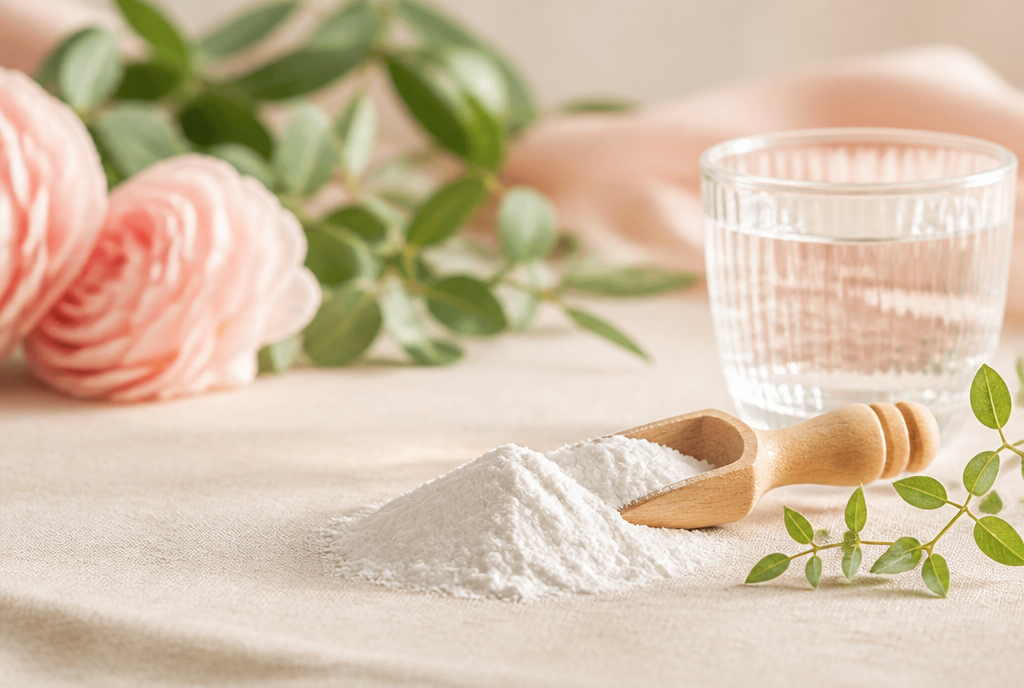
Creatine monohydrate is one of the most studied and safest supplements available, with decades of research behind it. The typical approach is a simple 3–5g daily, taken consistently — no loading phase required. It can be mixed into water or a shake, any time of day.
A common worry is "water weight" or bloating. Any early shift is usually water drawn into the muscle (which is part of how it works), not puffiness, and it tends to settle. As always, if you're pregnant, breastfeeding, or managing a health condition, check with your healthcare provider first.
In Summary — Why Creatine Deserves a Second Look
- 🌿 A natural compound your body already makes and stores
- 🌿 Women naturally store far less — and often top up less through food
- 🌿 Supports strength, lean tone and healthy ageing, especially with training
- 🌿 May sharpen focus and clarity, particularly under stress or poor sleep
- 🌿 Promising (honest, not hyped) evidence for mood in women
- 🌿 Simple, safe and well-researched at 3–5g a day
At LoveSelf, we believe strength and calm come from the same place — within. Creatine is one of those rare tools that supports both body and mind, which is exactly why we built it into Mind & Muscle — our pure creatine monohydrate, designed to support women's energy, focus and strength as part of a balanced routine.
Start within. Feel the difference.
Always consult your healthcare provider for personalised advice.